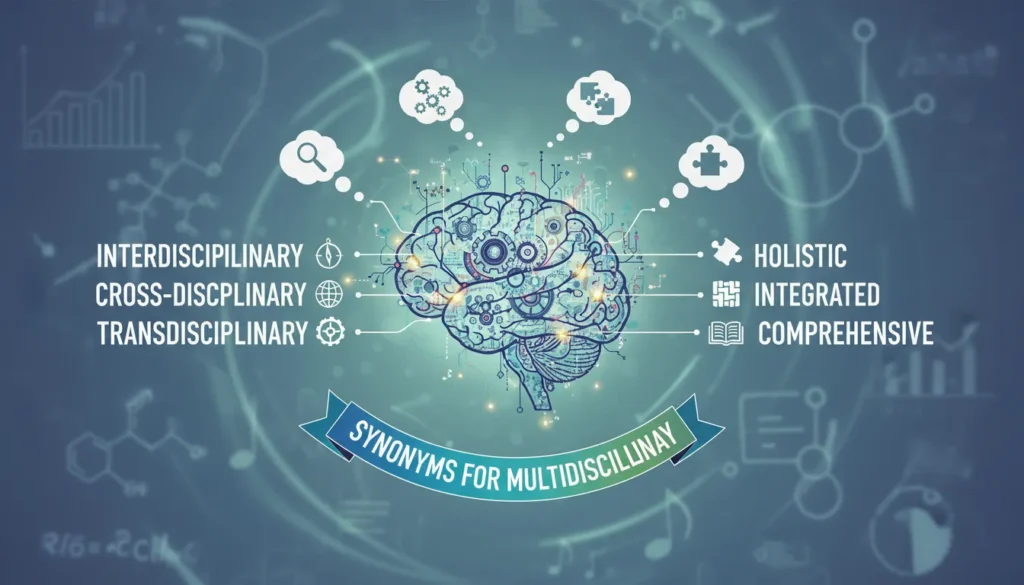
Many students, researchers, and professionals often seek synonyms for multidisciplinary to describe work or studies that involve multiple fields or areas of expertise. Multidisciplinary means combining or involving several academic or professional disciplines to solve problems or create knowledge.
For example, a medical team including doctors, nurses, and therapists working together is multidisciplinary. Similarly, a research project combining biology, computer science, and statistics is considered multidisciplinary.
Understanding and using synonyms for multidisciplinary is useful for students, writers, and content creators. It allows precise description of teamwork, research, education, and projects. Using these words enriches essays, blogs, and reports while making communication about cross-functional collaboration more professional and accurate.
⭐ ✨ Top 5 Synonyms for Multidisciplinary
║ 💎 🔹 Interdisciplinary • Cross-Functional • Collaborative • Integrative • Transdisciplinary ║
⭐ ✨ Top 5 Synonyms of Multidisciplinary
║ 👑 🔹 Holistic • Multifaceted • Combined • Coordinated • Joint ║
Pronunciation of Multidisciplinar
/ˌmʌl.tiˈdɪs.ə.plɪ.nɛr.i/
Sounds like “MULTI-DI-SI-PLIN-AIR-Y.”
Syllables of “Multidisciplinary”
Mul-ti-dis-ci-pli-na-ry (7 syllables)
50 Synonyms for Multidisciplinary
Interdisciplinary
Meaning:
Involving two or more academic disciplines.
Examples:
- Interdisciplinary: The university offers interdisciplinary courses.
- Interdisciplinary: Interdisciplinary research improves problem-solving.
Cross-Functional
Meaning:
Involving multiple functional areas of expertise.
Examples:
- Cross-Functional: Cross-functional teams work in product development.
- Cross-Functional: Cross-functional projects increase efficiency.
Collaborative
Meaning:
Working together with others to achieve a goal.
Examples:
- Collaborative: Collaborative efforts produce better results.
- Collaborative: Collaborative research involves experts from many fields.
Integrative
Meaning:
Combining different approaches or methods.
Examples:
- Integrative: Integrative medicine combines traditional and modern treatments.
- Integrative: Integrative teaching blends multiple subjects.
Transdisciplinary
Meaning:
Crossing traditional boundaries between disciplines.
Examples:
- Transdisciplinary: Transdisciplinary studies solve complex problems.
- Transdisciplinary: Transdisciplinary teams create innovative solutions.
Holistic
Meaning:
Considering all parts or aspects together.
Examples:
- Holistic: Holistic education focuses on all aspects of a student.
- Holistic: Holistic research examines multiple perspectives.
Multifaceted
Meaning:
Having many different aspects or features.
Examples:
- Multifaceted: The project is multifaceted and challenging.
- Multifaceted: Multifaceted strategies improve results.
Combined
Meaning:
Joined or mixed together.
Examples:
- Combined: Combined approaches solve complex problems.
- Combined: The combined efforts of experts led to success.
Coordinated
Meaning:
Organized to work together efficiently.
Examples:
- Coordinated: Coordinated planning improved the workflow.
- Coordinated: Coordinated research avoids duplication.
Joint
Meaning:
Shared or done together by multiple people.
Examples:
- Joint: The project was a joint effort between universities.
- Joint: Joint research fosters collaboration.
Integrated
Meaning:
Combined or connected to work as one.
Examples:
- Integrated: Integrated studies combine science and art.
- Integrated: The school has an integrated curriculum.
Cross-Disciplinary
Meaning:
Involving more than one academic discipline.
Examples:
- Cross-Disciplinary: Cross-disciplinary research fosters innovation.
- Cross-Disciplinary: Cross-disciplinary courses help students learn broadly.
Multi-Specialty
Meaning:
Involving several specialized areas.
Examples:
- Multi-Specialty: Multi-specialty teams treat patients more effectively.
- Multi-Specialty: Multi-specialty workshops encourage diverse skills.
Cooperative
Meaning:
Working together for a common goal.
Examples:
- Cooperative: Cooperative projects bring better results.
- Cooperative: Cooperative research combines efforts of many experts.
Interconnected
Meaning:
Linked or related in many ways.
Examples:
- Interconnected: Interconnected systems improve efficiency.
- Interconnected: Interconnected departments share information.
Comprehensive
Meaning:
Including all necessary parts.
Examples:
- Comprehensive: Comprehensive training covers multiple skills.
- Comprehensive: Comprehensive studies give a full picture.
Diverse
Meaning:
Including many different types.
Examples:
- Diverse: Diverse teams offer multiple perspectives.
- Diverse: Diverse approaches improve problem-solving.
Collective
Meaning:
Done together by a group.
Examples:
- Collective: Collective efforts lead to success.
- Collective: Collective research strengthens findings.
Team-Based
Meaning:
Organized around working in teams.
Examples:
- Team-Based: Team-based projects encourage collaboration.
- Team-Based: Team-based learning improves engagement.
Interprofessional
Meaning:
Involving different professions.
Examples:
- Interprofessional: Interprofessional collaboration improves patient care.
- Interprofessional: Interprofessional training helps students work across fields.
Combined Approach
Meaning:
Using multiple methods together.
Examples:
- Combined Approach: A combined approach solves complex issues.
- Combined Approach: Combined approaches increase research accuracy.
Multi-Sectoral
Meaning:
Involving multiple sectors or industries.
Examples:
- Multi-Sectoral: Multi-sectoral projects improve community health.
- Multi-Sectoral: Multi-sectoral collaborations strengthen policies.
Blended
Meaning:
Mixed together effectively.
Examples:
- Blended: Blended learning combines online and in-person classes.
- Blended: Blended research methods provide better data.
Networked
Meaning:
Connected in a system of relationships.
Examples:
- Networked: Networked teams share resources efficiently.
- Networked: Networked organizations collaborate on global projects.
Cross-Functional Approach
Meaning:
Using multiple functional areas together.
Examples:
- Cross-Functional Approach: A cross-functional approach enhances business projects.
- Cross-Functional Approach: Cross-functional approaches help solve organizational challenges.
Integrated Strategy
Meaning:
A plan that combines different methods.
Examples:
- Integrated Strategy: Integrated strategy improves marketing effectiveness.
- Integrated Strategy: Integrated strategies optimize workflow.
Interdepartmental
Meaning:
Involving multiple departments.
Examples:
- Interdepartmental: Interdepartmental meetings improve communication.
- Interdepartmental: Interdepartmental projects encourage collaboration.
Cross-Curricular
Meaning:
Involving multiple subjects in education.
Examples:
- Cross-Curricular: Cross-curricular projects improve learning.
- Cross-Curricular: Cross-curricular activities engage students.
Multi-Expert
Meaning:
Involving several experts.
Examples:
- Multi-Expert: Multi-expert panels review research proposals.
- Multi-Expert: Multi-expert advice strengthens decisions.
Integrated Approach
Meaning:
Using multiple techniques together effectively.
Examples:
- Integrated Approach: An integrated approach improves patient care.
- Integrated Approach: Integrated approaches enhance project outcomes.
Collaborative Strategy
Meaning:
Planning that involves teamwork.
Examples:
- Collaborative Strategy: Collaborative strategy increases productivity.
- Collaborative Strategy: Collaborative strategies strengthen partnerships.
Combined Expertise
Meaning:
Bringing together knowledge from multiple areas.
Examples:
- Combined Expertise: Combined expertise helps solve complex problems.
- Combined Expertise: Combined expertise ensures project success.
Cross-Industry
Meaning:
Involving different industries or fields.
Examples:
- Cross-Industry: Cross-industry collaborations lead to innovation.
- Cross-Industry: Cross-industry research produces new solutions.
Multi-Domain
Meaning:
Involving several areas of study or work.
Examples:
- Multi-Domain: Multi-domain knowledge improves problem-solving.
- Multi-Domain: Multi-domain projects integrate various perspectives.
Hybrid
Meaning:
Made by combining different elements.
Examples:
- Hybrid: Hybrid courses mix online and in-person teaching.
- Hybrid: Hybrid models combine theory and practice.
Multi-Layered
Meaning:
Having many levels or aspects.
Examples:
- Multi-Layered: Multi-layered strategies address complex challenges.
- Multi-Layered: Multi-layered research explores multiple angles.
Joint Effort
Meaning:
Work done together by many people.
Examples:
- Joint Effort: Joint effort solves bigger problems.
- Joint Effort: Joint efforts improve community projects.
Integrated Teams
Meaning:
Teams composed of members from different fields.
Examples:
- Integrated Teams: Integrated teams achieve better results.
- Integrated Teams: Integrated teams share expertise effectively.
Multi-Professional
Meaning:
Involving several professional disciplines.
Examples:
- Multi-Professional: Multi-professional education enhances collaboration.
- Multi-Professional: Multi-professional teams improve healthcare outcomes.
Interdisciplinary Approach
Meaning:
Using knowledge from multiple disciplines.
Examples:
- Interdisciplinary Approach: Interdisciplinary approach solves real-world problems.
- Interdisciplinary Approach: Interdisciplinary approaches boost research quality.
Diverse Expertise
Meaning:
Knowledge from many different areas.
Examples:
- Diverse Expertise: Diverse expertise strengthens decision-making.
- Diverse Expertise: Diverse expertise leads to innovation.
Multi-Field
Meaning:
Involving multiple areas of work or study.
Examples:
- Multi-Field: Multi-field research covers a wide scope.
- Multi-Field: Multi-field teams share insights.
Comprehensive Strategy
Meaning:
A complete plan covering multiple areas.
Examples:
- Comprehensive Strategy: Comprehensive strategy ensures project success.
- Comprehensive Strategy: Comprehensive strategies consider all perspectives.
Conclusion
Learning synonyms for multidisciplinary improves writing, research, and communication. Using terms like interdisciplinary, cross-functional, collaborative, and integrative allows clear and professional descriptions of work or studies that involve multiple fields. Practicing these words in essays, research papers, projects, and blogs enhances clarity, depth, and credibility.
Frequently Asked Questions (FAQ)
Q1: What does multidisciplinary mean?
A1: Multidisciplinary refers to combining or involving multiple fields, disciplines, or areas of expertise.
Q2: Why are synonyms for multidisciplinary important?
A2: They help students, researchers, and writers describe cross-functional or multi-field work accurately and professionally.
Q3: What are common synonyms for multidisciplinary?
A3: Common synonyms include interdisciplinary, cross-functional, collaborative, integrative, transdisciplinary, holistic, and multifaceted.
Q4: How can multidisciplinary approaches benefit projects?
A4: They improve problem-solving, innovation, and efficiency by combining expertise from different disciplines.
Q5: How do I use these synonyms in writing?
A5: Use them in essays, reports, blogs, or research to describe teamwork, projects, or studies involving multiple disciplines.