
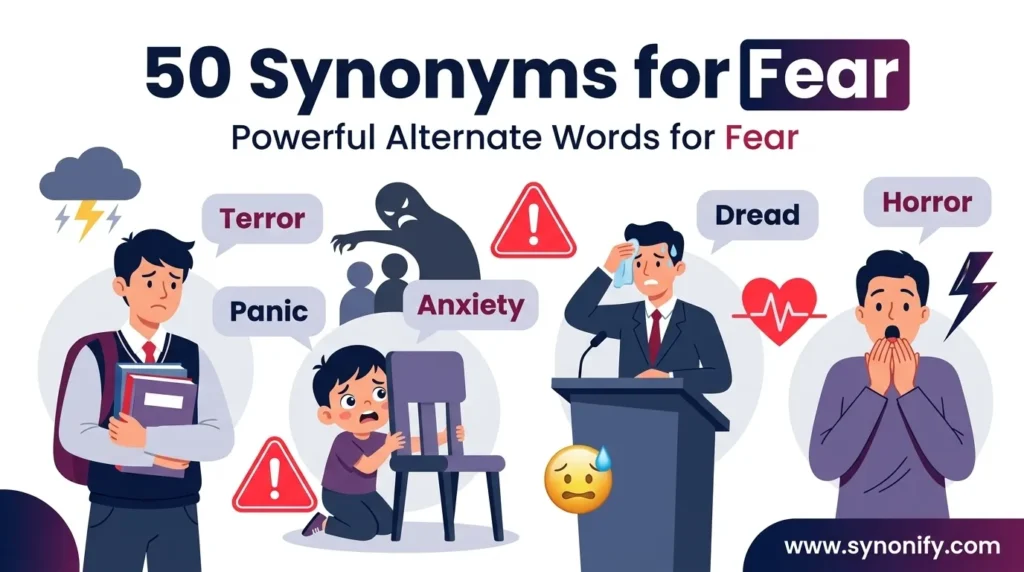
Have you ever felt scared before an exam, a dark night, or speaking in front of people? Everyone feels fear sometimes. It is a normal feeling that happens when we think something bad may happen.
Learning synonyms for fear can help you express emotions better in speaking and writing. Fear means feeling scared, worried, or unsafe. For example, a child may feel fear during a thunderstorm.
These synonyms of fear are very useful for students, bloggers, writers, and daily English users. They help improve essays, stories, captions, blogs, and conversations. Using alternate words for fear also makes your English sound smarter and more natural.
✨ Top 5 Synonyms for Fear List ✨
Terror • Fright • Anxiety • Panic • Worry
✨ Next 5 Synonyms for Fear List ✨
Dread • Horror • Nervousness • Alarm • Concern
Pronunciation of “Fear”
- Phonetic Spelling: feer
- IPA Format: /fɪər/
- Simple Breakdown: fear
Syllables of “Fear”
- Syllable Breakdown: fear
- The word “fear” has one syllable.
- It is short and easy to pronounce.
List of 50 Synonyms for Fear
1. Terror
Meaning
A very strong feeling of fear.
Examples
- The loud noise caused terror.
- She felt terror in the dark room.
2. Fright
Meaning
A sudden feeling of fear.
Examples
- The movie gave me a fright.
- He jumped in fright.
3. Anxiety
Meaning
A worried or nervous feeling.
Examples
- Exam anxiety kept her awake.
- He felt anxiety before the interview.
4. Panic
Meaning
A sudden strong fear.
Examples
- People felt panic during the storm.
- She started to panic before speaking.
5. Worry
Meaning
A feeling of concern or fear.
Examples
- My mother had worry about me.
- He showed worry on his face.
6. Dread
Meaning
A strong fear about something coming.
Examples
- She felt dread before the test.
- He lived in dread of failure.
7. Horror
Meaning
A feeling of shock and fear.
Examples
- They watched in horror.
- The horror on her face was clear.
8. Nervousness
Meaning
A shy or worried feeling.
Examples
- Nervousness made him quiet.
- She smiled to hide her nervousness.
9. Alarm
Meaning
A sudden feeling of danger.
Examples
- The loud scream caused alarm.
- Parents felt alarm after the news.
10. Concern
Meaning
A worried feeling about something.
Examples
- His parents showed concern.
- She spoke with concern.
11. Unease
Meaning
A feeling of discomfort or fear.
Examples
- The silence created unease.
- He felt unease at night.
12. Distress
Meaning
A feeling of sadness and fear.
Examples
- The child cried in distress.
- Her voice showed distress.
13. Apprehension
Meaning
A nervous feeling about the future.
Examples
- He waited with apprehension.
- She felt apprehension before surgery.
14. Phobia
Meaning
A very strong fear of something.
Examples
- He has a phobia of spiders.
- Her phobia made travel hard.
15. Shock
Meaning
A sudden feeling caused by fear.
Examples
- The news gave everyone shock.
- She stood there in shock.
16. Timidity
Meaning
A shy and fearful nature.
Examples
- Timidity stopped him from speaking.
- Her timidity was easy to notice.
17. Cowardice
Meaning
A lack of courage because of fear.
Examples
- People called it cowardice.
- His cowardice disappointed the team.
18. Jitters
Meaning
A nervous and shaky feeling.
Examples
- The singer had jitters backstage.
- I get jitters before exams.
19. Tension
Meaning
A worried or stressed feeling.
Examples
- Tension filled the room.
- He carried tension in his face.
20. Trepidation
Meaning
A feeling of fear about something.
Examples
- She entered with trepidation.
- He spoke with trepidation.
21. Hesitation
Meaning
A pause caused by fear or doubt.
Examples
- He answered with hesitation.
- Her hesitation was clear.
22. Foreboding
Meaning
A feeling that something bad may happen.
Examples
- The dark sky brought foreboding.
- She felt foreboding before the trip.
23. Insecurity
Meaning
A feeling of fear about yourself.
Examples
- Insecurity hurt his confidence.
- She struggled with insecurity.
24. Misgiving
Meaning
A doubtful and fearful feeling.
Examples
- He had misgivings about the plan.
- She spoke with misgiving.
25. Startlement
Meaning
A sudden feeling of surprise and fear.
Examples
- The sound caused startlement.
- He looked at me in startlement.
26. Agitation
Meaning
A worried and upset feeling.
Examples
- Agitation spread through the crowd.
- She showed signs of agitation.
27. Disturbance
Meaning
A troubled feeling caused by fear.
Examples
- The news caused disturbance.
- He slept with disturbance in mind.
28. Anguish
Meaning
A deep painful fear.
Examples
- Her face showed anguish.
- He cried in anguish.
29. Paranoia
Meaning
A strong fear that others may harm you.
Examples
- Paranoia made him restless.
- She struggled with paranoia.
30. Bewilderment
Meaning
Confused fear.
Examples
- The child looked in bewilderment.
- His face showed bewilderment.
31. Nervousness
Meaning
A worried and uneasy feeling.
Examples
- Her nervousness was visible.
- He laughed from nervousness.
32. Fearfulness
Meaning
The habit of being fearful.
Examples
- Fearfulness stopped her from trying.
- His fearfulness grew at night.
33. Consternation
Meaning
A feeling of worry and shock.
Examples
- The news caused consternation.
- Parents reacted with consternation.
34. Trauma
Meaning
Deep emotional fear after a bad event.
Examples
- The accident caused trauma.
- She needed time after the trauma.
35. Cold Feet
Meaning
Fear before doing something important.
Examples
- He got cold feet before marriage.
- She had cold feet before the speech.
36. Wavering
Meaning
Fear causing uncertainty.
Examples
- His wavering was obvious.
- She spoke with wavering confidence.
37. Suspicion
Meaning
A fearful feeling that something is wrong.
Examples
- He looked at me with suspicion.
- Her suspicion grew slowly.
38. Doubt
Meaning
A feeling of uncertainty and fear.
Examples
- Doubt filled his mind.
- She answered with doubt.
39. Timidness
Meaning
A shy and fearful behavior.
Examples
- Timidness held him back.
- Her timidness was noticeable.
40. Fear
Meaning
A feeling of being scared.
Examples
- Fear stopped him from trying.
- She felt fear in the dark.
41. Franticness
Meaning
Wild fear and worry.
Examples
- Franticness spread quickly.
- She acted with franticness.
42. Restlessness
Meaning
A worried and uneasy feeling.
Examples
- Restlessness kept him awake.
- She showed restlessness before the exam.
43. Despair
Meaning
A feeling of hopeless fear.
Examples
- Despair filled the room.
- He cried in despair.
44. Pressure
Meaning
A stressful and fearful feeling.
Examples
- Pressure made him nervous.
- She worked under pressure.
45. Frightfulness
Meaning
A strong scary feeling.
Examples
- The storm had frightfulness.
- Her voice carried frightfulness.
46. Vulnerability
Meaning
A feeling of being weak or unsafe.
Examples
- He shared his vulnerability.
- She felt vulnerability alone.
47. Weakness
Meaning
A lack of strength because of fear.
Examples
- Fear showed as weakness.
- His weakness became obvious.
48. Alarmism
Meaning
Spreading fear about danger.
Examples
- The article created alarmism.
- People disliked the alarmism online.
49. Terrorizing
Meaning
Creating fear in others.
Examples
- The bully was terrorizing kids.
- Loud threats were terrorizing people.
50. Scare
Meaning
A small sudden fear.
Examples
- The dog gave me a scare.
- She had a scare last night.
FAQs About Synonyms for Fear
What are the best synonyms for fear?
Some common fear synonyms are terror, panic, anxiety, fright, horror, and dread.
Why should students learn synonyms of fear?
Students can improve essays, stories, and English speaking skills by learning alternate words for fear.
What is another word for fear in writing?
Worry, panic, terror, concern, and anxiety are popular another words for fear in writing.
Are fear synonyms useful for SEO content?
Yes. Using synonyms of focus keywords improves SEO optimization and makes content sound natural.
Can bloggers use fear synonyms naturally?
Yes. Bloggers and content writers use fear synonyms to avoid repetition and improve readability.
Conclusion
Learning synonyms for fear helps improve writing, speaking, blogging, and communication skills. These alternate words for fear make your English more natural, emotional, and powerful.
Practice these fear synonyms in essays, emails, blogs, captions, and daily conversations. The more vocabulary you learn, the stronger your English becomes.

I am a professional blogger and content writer specializing in synonyms. With a strong focus on research-based writing and clear communication, I creates high-quality content designed to inform, educate, and add long-term value for readers.I am committed to maintaining accuracy, consistency, and professionalism across all published work.